
Community Board 8 backs Riverdale synagogue proposal on Arlington Avenue
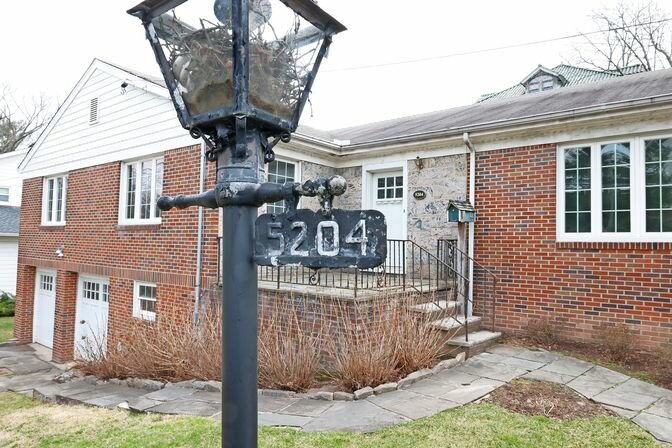
Bronx Community Board 8’s Land Use Committee gave their approval June 1 to the Talner Congregation Beth David to start construction on a synagogue at 5204 Arlington Ave. by approving of its Special Natural Area District authorization application.
The project is still awaiting approval from the New York City Planning Commission, and then the New York City Department of Buildings. However, if Talner receives the green light from them as well, the vacant house that currently rests on the lot will be demolished. Its replacement will be a synagogue around 4,100 square feet, constructed from brick and wood to blend with the surrounding houses. It will have a pitched ceiling and hold 120 people, according to Michael Goldblum, the project’s architect. Construction is estimated to take between a year and 16 months, Goldblum said.
The community board is an advisory body, but its stance is taken into consideration when the city makes a decision. The resolution approving of the application will also face a vote by the full board.
The 5204 Arlington Ave. lot is also inside a Special Natural Area District, which is a zoning regulation made to preserve the environment. If developers want to build in one of these districts, they must go through a stricter process to make sure there is minimal impact to the land, according to the New York City Department of City Planning’s application requirements. Riverdale’s natural area district runs along the Hudson River from Mount Saint Vincent to Spuyten Duyvil Shorefront Park, and stretches east to include areas such as Seton Park, Wave Hill and the Fieldston Historic District.
Residents expressed concerns about the project at the June community board meeting, which had also been voiced at a March meeting when the synagogue was first introduced. Those concerns included the potential for flooding due to the slope of the property, congregants taking up parking space, an increase in sewage and the safety of kids walking down a street with increased traffic.
A resident who said he lives on the block, Jordan Altman, expanded on the latter two. When the synagogue hosts an event such as a bat mitzvah, Altman worried about what would happen if the number of attendees hit the maximum occupancy.
“There’s really nowhere for [kids] to go other than down the middle of the road,” Altman said at the meeting. “Suddenly my kids would have to worry about cars coming at them for up to 120 people.”
He added the block faces a significant sewage issue, and it “doesn’t take much” for sewage to overflow the drains and cause a stench. The proposed synagogue will have four bathrooms, and the amount of congregation members using them could worsen an existing problem, Altman said.
Others expressed their support for the project. Steven Cooper, who said he lives within 200 feet of the proposed synagogue, said at the meeting he knows those involved in the project, and can vouch for their “stellar integrity.” While he shares safety concerns, Cooper believes residents are overestimating how many congregants will be at the synagogue at one time.
“We’re really talking about the mid-teens,” Cooper said at the meeting. “I don’t think the volume will be anywhere near people’s worry. I loudly endorse this project.”
Goldblum said at the meeting that, to help with flooding, there will be a trench around most of the synagogue that leads rainwater to a drainage pipe and into a dry well. He emphasized that those involved in the project have “gone above and beyond to create a dry site that doesn’t contribute in any way to the flooding issues that people on the block endure.”
Over the last 15 years, Talner has moved from rental to rental in Riverdale, congregation member and Riverdale resident Annette Rubin said at a March meeting. Rubin added the Arlington Avenue site would serve older adults and people with disabilities who live nearby and aren’t able to make it to further orthodox synagogues.
Rubin said the synagogue will have two levels, with a space for prayer and study above, and an area below for life events such as a bris or a bat mitzvah.
“Houses of worship are basic components of a solid, strong community,” Goldblum told The Press in March. “They hold communities together.”
Keywords
Riverdale synagogue, Talner Congregation Beth David, 5204 Arlington Avenue, Bronx Community Board 8, Riverdale development, Special Natural Area District, Riverdale zoning, New York City Planning Commission, Arlington Avenue project


